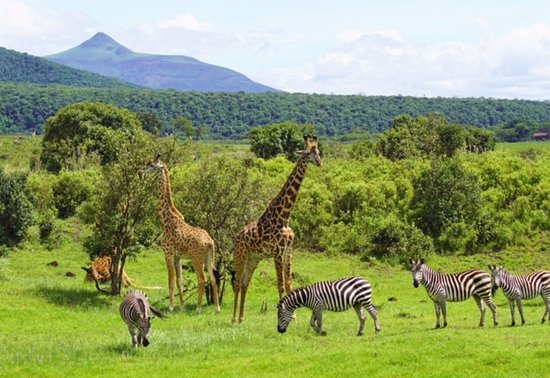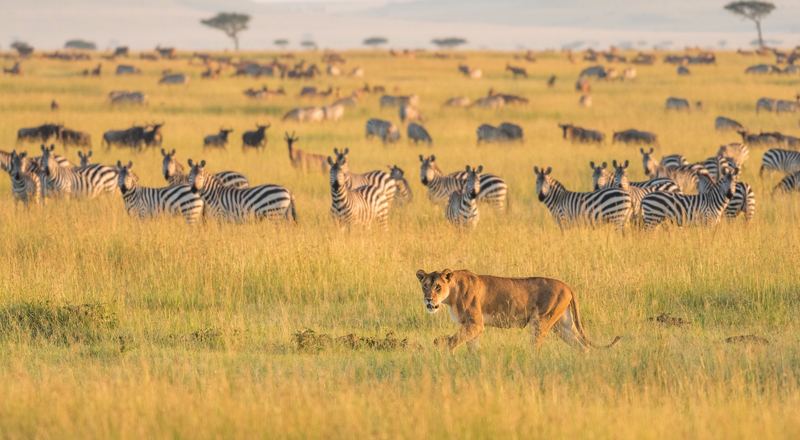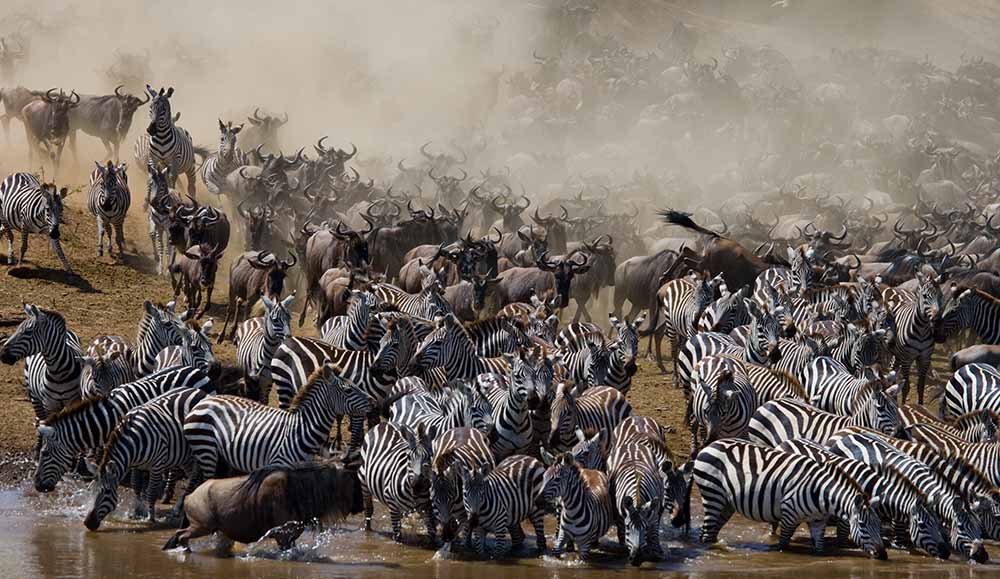
For a few weeks each year, the short grass plains around Ndutu become a nursery. Wildebeest calves are born in huge numbers, often within a short span of time, and predators gather to take advantage. It is a busy, lively scene rather than a gentle one. We explain when calving typically happens, what you can see, and how to plan a trip that makes the most of it. Read on for the details before choosing your dates.
Where and when
Ndutu lies in the south-eastern Serengeti and the neighbouring Ngorongoro Conservation Area. The plains here have nutrient-rich short grass, which is why the herds return in the green months.
Calving is usually concentrated in the period from about late January to March, although the exact timing shifts with the rains. Early in the year the herds are also spread widely across the plains.
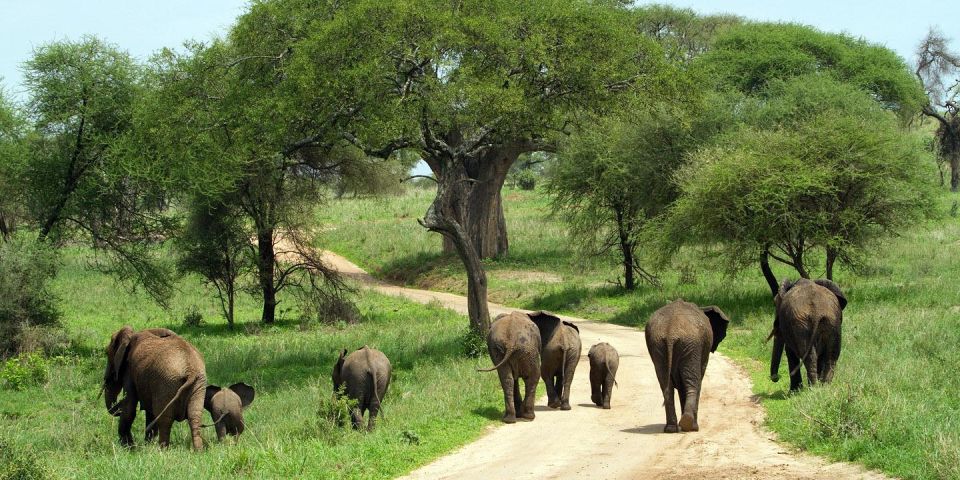
The area around Ndutu is mostly open, with acacia woodland near the lake and short grass beyond. That openness is why sightings are so clear. Drives are often long and dusty or muddy depending on the weather, and a good guide knows which tracks to avoid after rain.
What you might see
Newborn calves can stand within minutes, which is one of the most remarkable aspects of the season. You may watch births from the vehicle, and see mothers guarding the young.
Lions, cheetahs, hyenas and jackals are drawn by the easy hunting. Wildlife drama is frequent, and some scenes can be hard to watch.
- Calves standing within minutes of birth
- Cheetahs and lions on open plains
- Hyenas and jackals near herds
- Woodland birds and lake edges around Ndutu
Practical considerations
The weather in these months can be warm with showers, and roads may be muddy. Dust is less of a concern than in the dry season, but you should bring a rain jacket.
Because this is a popular time, vehicles gather at good sightings. Your guide will advise on positioning to give you a clear view while respecting the animals.
Where to stay in the Ndutu area
Accommodation near Ndutu ranges from simple camps to more comfortable lodges, many of them seasonal. Mobile tented camps move to follow the herds, and others stay in one place.
A camp close to the plains saves time on early drives, but the best choice depends on where the herds gather that season. We advise based on your dates and budget.
Planning your trip
Ndutu works well in a trip of four to six days, often combined with Ngorongoro and Tarangire. Accommodation is limited and sells early, so planning ahead is wise.
Costs depend on dates and accommodation, so we tailor each plan and give a current quote on request.
Related pages on our site
Frequently asked questions
What month is best for calving?
Calving typically peaks in February, though it can start in late January and continue into March. Rains shape the timing, so some flexibility helps. Many travellers choose a stay of several nights to improve their chances.
Do the herds stay at Ndutu for the whole season?
They move around within the southern plains, following grass and rain. Your guide will track where the largest groups are on the day. We help you plan with that flexibility.
Is calving season suitable for children?
Many children enjoy it, but predator kills can be upsetting. Talk to your guide in advance if you are travelling with sensitive young travellers. Our guides help you decide what to watch.
Can I combine Ndutu with the Crater?
Yes. The two areas are close, and many itineraries pair them. Ngorongoro Crater adds a different landscape and a chance of seeing black rhino, though sightings are never certain. We can arrange the order to suit your dates.