
Turquoise lagoons, dramatic tides and steady trade winds define Paje and Jambiani, two east coast villages with very different personalities worth understanding before you book.
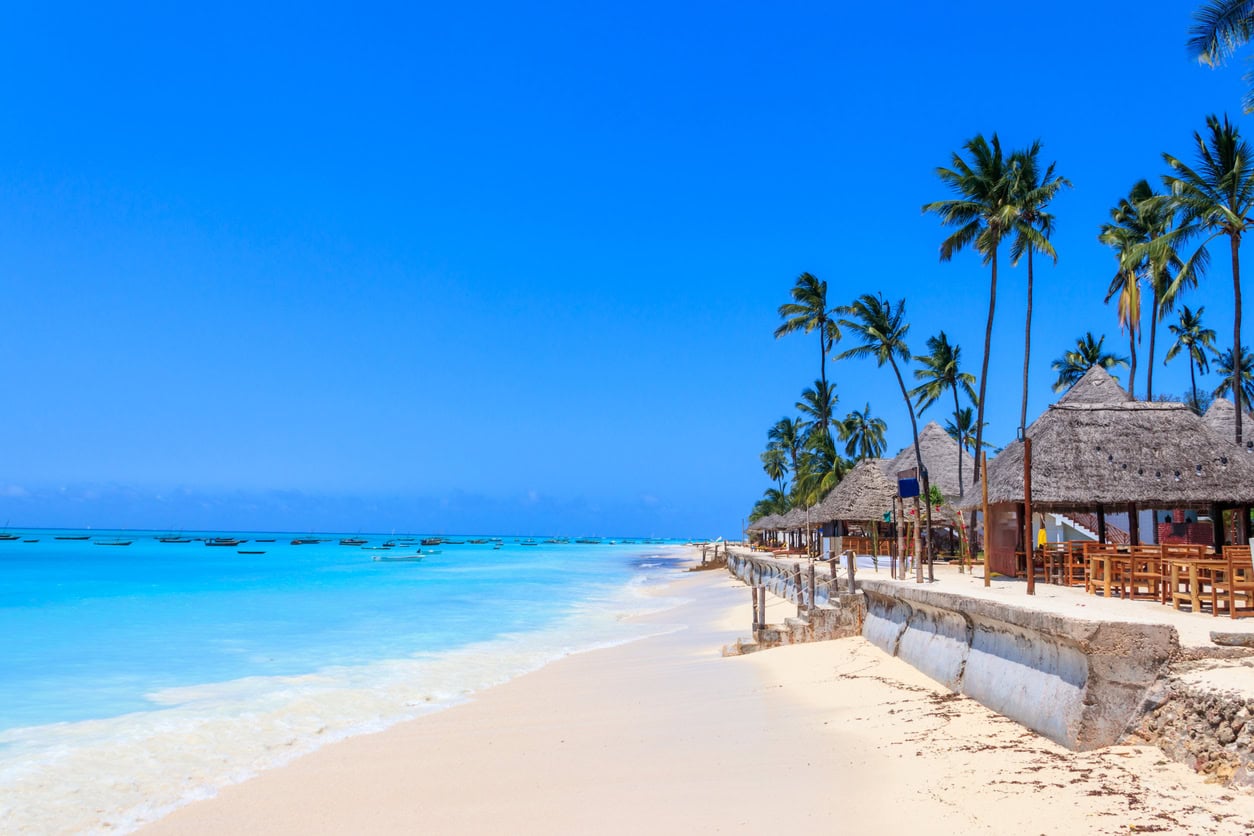
Zanzibar's southeast coast looks unlike the north. A coral reef sits offshore, and between it and the beach lies a broad, shallow lagoon that empties and fills with the tide. At low water you can walk far out across the sand and seagrass; at high water the lagoon turns a vivid turquoise.
Paje and Jambiani share this coastline but attract different crowds. Paje has become one of East Africa's best-known kitesurfing spots, while Jambiani, just to the south, remains a long, quiet village where seaweed farming is still part of daily life.
Quick tips
- Ask your hotel for a printed tide table on arrival.
- Wear reef shoes when walking the lagoon to protect against sea urchins and sharp coral.
- Book a kite lesson for your first windy day rather than waiting until the end of your stay.
- Respect seaweed farms and avoid walking through planted plots.
- Carry some cash, as card acceptance in small village restaurants can be patchy.
Understanding the Tides
The tides are the single most important thing to know about this coast. At low tide the water can retreat a long way, leaving pools, sandbars and seaweed farms exposed. Swimming at that point means wading a fair distance or waiting a few hours.
Tide times shift by roughly an hour each day and follow the lunar cycle, with the biggest ranges around full and new moon. Most hotels post a tide table at reception. Plan swims, snorkel trips and lagoon walks around it rather than fighting it, and the rhythm quickly becomes part of the charm.
Paje: The Kitesurfing Hub
Paje's flat, shallow lagoon and consistent wind make it ideal for learning to kite. Many schools operate along the beach, offering beginner courses, equipment rental and supervised sessions. The main wind seasons are usually the kaskazi, roughly December to February, and the stronger kusi, roughly June to September, although conditions vary year to year.
Outside kiting, Paje has a relaxed, young atmosphere with beach cafes, small guesthouses and a handful of bars. It is busier than its neighbors but still far from crowded by resort standards.
- Choose a school that is clear about safety briefings and rescue cover
- Beginners usually learn best at mid tide in the lagoon
- Wear sun-protective clothing, since sessions involve long hours in reflected glare
Jambiani: Slow Village Life
Jambiani stretches for several kilometers along the shore, with homes, small mosques and guesthouses scattered between palm trees. At low tide you will often see women tending seaweed plots in the lagoon, an important source of income in the area. Please ask before photographing anyone at work.
This is a place for long walks, sunrise swims and simple seafood dinners. Nightlife is minimal, and that is exactly why many travelers love it.
Who Should Stay Where
Paje suits active travelers, kitesurfers and those who want a few places to socialize in the evening. Jambiani suits couples and anyone seeking calm, especially after a busy safari. Both work well as bases for visiting Jozani Forest and the southern coast, and both are generally a shorter drive from the airport than the far north.
Seaweed and Seasonal Changes
Natural seaweed washes up on the east coast at certain times of year, sometimes in noticeable quantities. It is a normal part of the ecosystem and not a sign of pollution, but it can affect how the beach looks on a given day. If a pristine beach view is essential, mention it when planning and we will factor timing and location into our advice.
Frequently asked questions
Can you swim at Paje and Jambiani at low tide?
At low tide the water may be far from the beach and too shallow for proper swimming. Most visitors swim around high tide and use low tide for walking the lagoon or exploring rock pools.
Is Paje good for beginner kitesurfers?
Yes. The shallow, flat lagoon is widely regarded as a forgiving place to learn. Take lessons with an established school, and follow their guidance on tide and wind conditions.
Which is quieter, Paje or Jambiani?
Jambiani is generally quieter, with a village feel and very little nightlife. Paje has more cafes, bars and activity, largely thanks to its kitesurfing scene.
