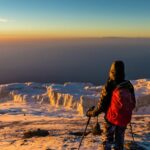

Climbing Mount Kilimanjaro requires the right equipment to keep you warm, dry, and comfortable from the rainforest to the summit’s icy landscapes. Temperatures can vary from 25°C at the base to -20°C at the summit, so having the correct gear is essential for safety and success.
Below is a comprehensive guide to what every climber should bring.
Essential Clothing
Layered Clothing System
The key to staying comfortable on Kilimanjaro is layering. Layers allow you to add or remove clothing depending on weather and altitude.
-
Base Layers: Moisture-wicking tops and leggings to keep your body dry. Choose merino wool or synthetic materials.
-
Mid Layers: Fleece jackets, softshell tops, and insulated pants for warmth during cooler sections.
-
Outer Layers: Waterproof and windproof jackets and trousers to protect you from rain, snow, and harsh winds.
Insulated Jacket
A warm down or synthetic jacket is important for summit night when temperatures drop significantly.
Footwear & Accessories
Hiking Boots
-
High-quality hiking boots with ankle support
-
Waterproof and breathable (Gore-Tex or similar)
-
Must be broken in before your trek to avoid blisters
Bring comfortable trekking socks (3–5 pairs), ideally moisture-wicking or wool blends.
Cold-Weather Accessories
-
Warm gloves (inner liners + outer insulated gloves)
-
Thermal hat/beanie that covers the ears
-
Neck buff or balaclava for wind protection
-
Sunglasses with UV protection (snow can be bright at higher altitudes)
Sleeping Gear
Sleeping Bag
A high-quality sleeping bag is essential for cold nights on the mountain.
-
Recommended rating: –10°C to –15°C (14°F to 5°F)
-
Choose down or synthetic insulation
-
Bring a sleeping bag liner for extra warmth and hygiene
Sleeping Mat
Most tour operators provide a sleeping mat, but you may bring your own lightweight inflatable mat for added comfort.
Trekking Equipment
Headlamp
A reliable headlamp is crucial for summit night and early morning starts.
-
Bring extra batteries, as cold temperatures drain power quickly.
Trekking Poles
Trekking poles help with:
-
Balance
-
Reducing strain on knees
-
Managing steep descents and loose terrain
Adjustable or foldable poles are ideal.
Hydration & Bags
Hydration System
Staying hydrated is key to altitude success.
-
2–3 liter hydration bladder for easy sipping
-
Additional water bottles (insulated bottles preferred for cold nights)
Bags
-
Duffel Bag (80–100L): Carried by porters; should be soft-sided and waterproof.
-
Daypack (25–35L): Your personal pack for daily essentials like water, snacks, camera, extra layers, and rain gear.
Ensure your daypack has good back support and fits comfortably.
Additional Recommended Items
-
Gaiters (for rain or scree)
-
Lightweight camp shoes
-
Quick-dry towel
-
Personal toiletries and wet wipes
-
Sunscreen (SPF 30+), lip balm
-
Reusable dry bags for organizing gear
-
First aid basics (blister care, pain relief, etc.)
Gear Rental Options
Most climbers rent some equipment in Tanzania to reduce luggage weight or cost. Your tour operator can assist you with:
-
Sleeping bags
-
Trekking poles
-
Down jackets
-
Gaiters
-
Headlamps
-
Waterproof gear
All items are cleaned and inspected before use.
Final Notes
Packing the right gear greatly increases your comfort, safety, and chances of reaching the summit. Start preparing early, test your equipment during training hikes, and always choose quality over convenience.