
Leopards are masters of staying hidden, but knowing which trees, rivers and times of day to focus on dramatically improves your odds in Tanzania.
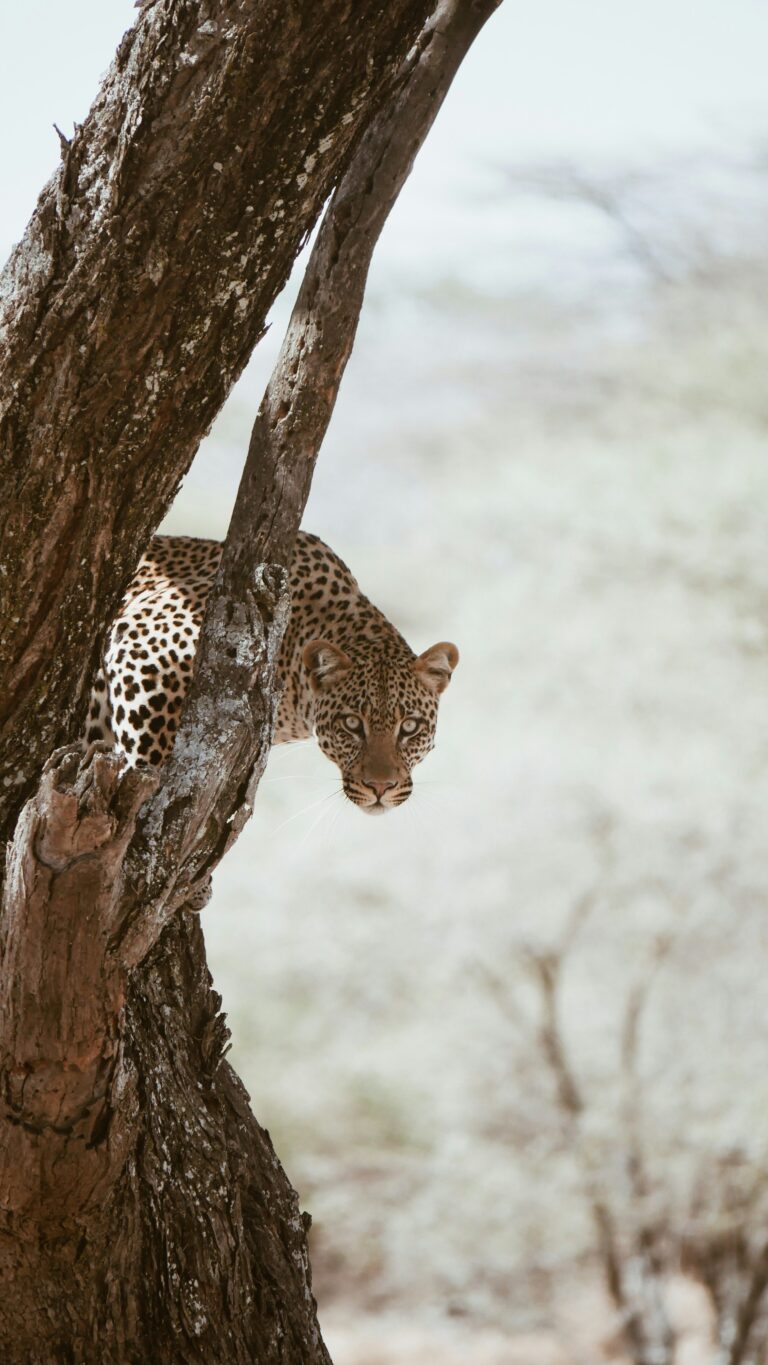
Of all the animals travelers hope to see in Tanzania, the leopard is the one most likely to stay just out of reach. It is solitary, mostly active from dusk to dawn, and so well camouflaged that a guide can drive past one resting in a tree only a few yards away. Yet leopards are widespread here, and with patience and the right approach, many of our guests do get that unforgettable view of a spotted cat draped over a branch.
Finding one is less about luck than about knowing where to look and what to look for. At Ndovu African Expeditions, these are the habits and habitats our guides focus on when a guest tells us a leopard is at the top of their list.
Quick tips
- Bring binoculars so you can check distant trees and suspicious shapes quickly.
- Ask your guide to plan full-day drives in areas like Seronera or Tarangire.
- Look for hanging tails and dangling carcasses rather than the whole cat.
- Listen for baboon and monkey alarm calls, which often signal a predator nearby.
- Stay quiet and still once you find a leopard so it stays relaxed in view.
Where Leopards Live in Tanzania
Leopards are adaptable and occur in most of Tanzania's major parks, but some areas give you noticeably better odds. In the Serengeti, the Seronera River valley in the center of the park is famous for leopards resting in sausage trees and yellow-barked acacias along the watercourse. The riverine woodland gives them shade, cover and a safe place to stash prey away from lions and hyenas.
Tarangire, with its dense riverine vegetation and big trees, is another productive area, as is Ruaha in the south, where rocky outcrops and dry riverbeds suit the species well. Lake Manyara's forest and the edges of the Ngorongoro Crater also hold leopards, though sightings there are less predictable.
Learn to Scan Trees the Right Way
Most daytime leopard sightings start with a tree. Rather than looking for a whole cat, train your eyes to pick out the shapes that give one away. A leopard on a branch rarely looks like a leopard at first glance; it looks like a thick lump or an oddly shaped shadow.
- A long tail hanging straight down from a branch, sometimes with a white tip
- A carcass wedged in a fork, often an antelope with legs dangling
- A horizontal shape on a broad limb that is too rounded to be wood
- Large trees standing alone near water, which are favorite resting spots
Timing Your Search
Leopards are most active in low light. The first hour after the park gates open and the last hour before you need to be back in camp are the prime windows, when cats may still be moving, finishing a hunt or descending from a tree. During the heat of the day they usually lie up in thick shade, and you will be relying on spotting a tail or a silhouette.
This is a big reason we recommend full-day game drives with a packed lunch in leopard country. Leaving early and staying out late puts you in the right place at the right time without wasting those golden hours on driving back to the lodge.
Read the Clues Around You
Other animals often know where a leopard is long before people do. Baboons and vervet monkeys give sharp, repeated alarm calls when they see one, and impala may stand frozen and stare into a thicket. Guides also watch for vultures perched quietly in a tree rather than gathering on the ground, which can suggest a kill stored out of reach.
Fresh tracks on a sandy track, a drag mark across the road, or a cluster of stopped vehicles can all point toward a cat. Our guides also share information by radio, which widens the search considerably.
Once You Find One
A relaxed leopard can stay in view for a long time, but a nervous one will simply slide down and vanish. Keep voices low, avoid standing up suddenly through the roof hatch, and let your guide position the vehicle without crowding the tree. If the cat is on a kill, it will often return to feed later, so a little patience can be rewarded with a second, better sighting.
Frequently asked questions
Is a leopard sighting guaranteed on a Tanzania safari?
No wild sighting can be guaranteed, and leopards are the most elusive of the big cats. That said, a safari of several days that includes areas like central Serengeti or Tarangire gives you a realistic chance.
What is the best park in Tanzania for leopards?
The Seronera area of the central Serengeti is widely regarded as one of the most reliable places in East Africa. Tarangire and Ruaha are also good options, especially along their rivers.
Can I see leopards on a night drive?
Night drives are only permitted in certain areas, such as some private concessions and specific zones, not in most national parks. Ask us which accommodations offer them if after-dark viewing is a priority for you.


