Few wildlife scenes are as talked about as wildebeest plunging into the Mara River, with crocodiles waiting below. In Tanzania the crossings take place in the northern Serengeti, and seeing one takes patience as well as timing. This page explains the usual season, why the herds hesitate, what a crossing day looks like, and how to plan a trip that gives you a fair chance. Read on for a realistic picture before you commit to a date.
When crossings usually occur
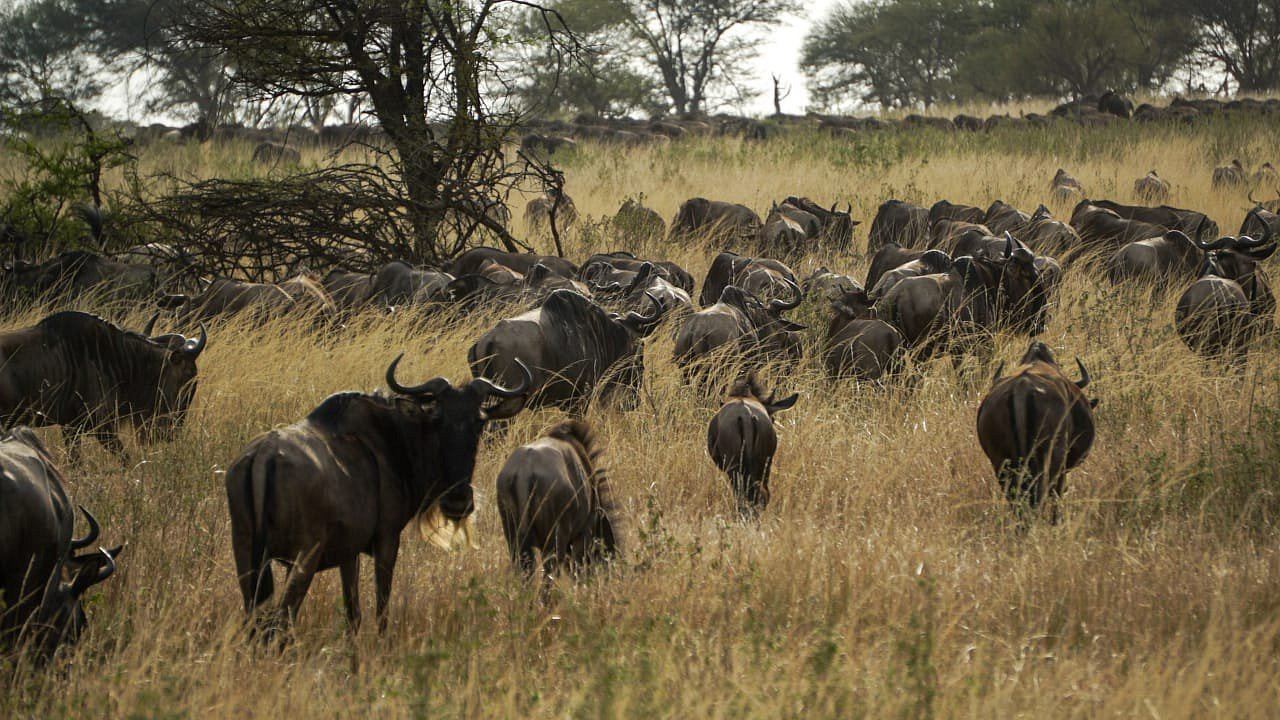
In many years the herds reach the northern Serengeti around July and remain there into October, crossing back and forth between the Tanzanian and Kenyan sides. The pattern is influenced by rainfall and grazing, so dates change each year.
Because the animals can cross the Mara or the Sand River at several points, there is no fixed schedule. A crossing may happen in the morning, midday or not at all on a given day.
Do not plan your whole trip around a single event. Wildlife in the north is rewarding even when the herds delay, and the quiet landscape, elephants and big cats provide plenty to enjoy while you wait for the right moment at the river.
What a crossing day looks like
Most of the day is spent waiting. Guides place the vehicle near a known crossing point and watch for signs: herds gathering on the bank, hesitation, and sudden movement as one animal leads and others follow.
The scene can end in minutes or turn into a long, dusty and noisy rush. Bring snacks, patience and a camera ready to shoot quickly.
- Pack a hat, water and a lunch for long waits
- Stay quiet and keep arms inside the vehicle
- Expect other vehicles at popular points
- Be ready to move if the herd turns back
Improving your odds
Stay at least three nights in the north, so you have several days to be at the river. Travelling with a driver-guide who knows the area and communicates with others helps.
Resident wildlife in the north is also strong, with lions, elephants and many birds, so a quiet crossing day is rarely empty.
Photography and etiquette at the river
Crossings happen fast, so set your camera in advance, use a fast shutter speed and keep a wide margin around your subject. Binoculars help you follow the build-up.
Never ask your guide to drive close to the bank, as pressure from vehicles can turn the herds back. Patience and distance often give the best results.
Planning and booking
Accommodation in the north is limited, and the busiest months fill early. We suggest asking for options well ahead.
We tailor each trip to your dates and budget. Ask us for a current quote, and check current park rules and requirements before you travel.
Related pages on our site
- 6-day river crossing safari
- 10-day Mara River migration safari
- 8-day Mara River crossing tour
- Wildebeest migration safaris
Frequently asked questions
Can I guarantee seeing a river crossing?
No. Crossings depend on the herds, not on a schedule. Staying several days in the north raises your chances, but nothing is certain. Remember that wildlife follows its own timetable.
How many days do I need in the north?
Three nights is a sensible minimum. A longer stay allows for patience and weather, and gives you more chances to be at the river. We suggest at least three nights in the area.
Is the Mara crossing worth the effort?
Many travellers find it unforgettable, but it can involve long waits. If you value the whole landscape and its wildlife, the trip is rewarding even without a crossing. Your guide will also point out other wildlife along the way.
Do crossings happen on the Tanzanian side?
Yes. The Mara River flows through the northern Serengeti, and herds cross between Tanzania and the Kenyan side. Which bank they use and when depends entirely on the herds, so staying several days gives you the best chance.