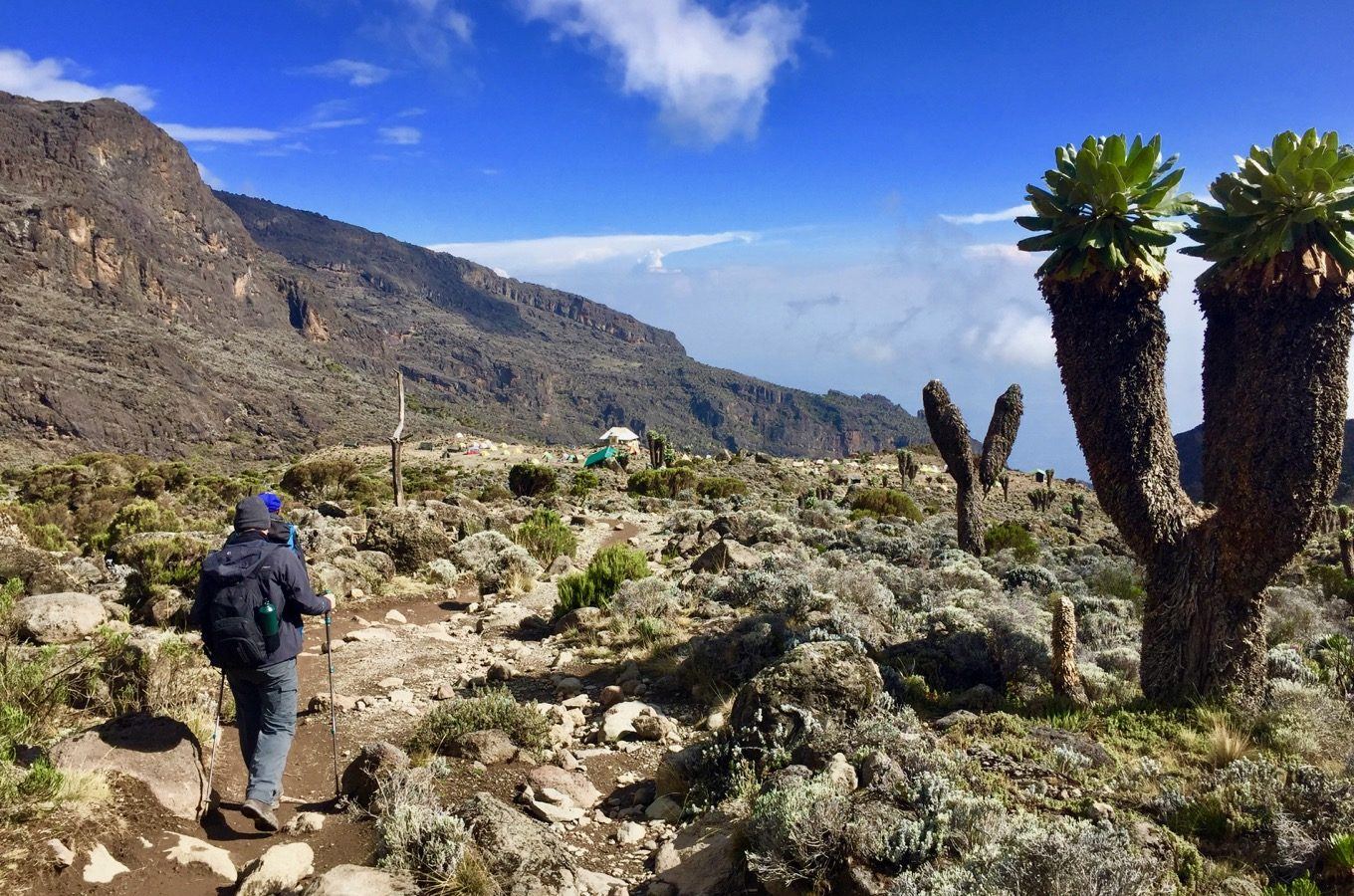
The Machame route is the one many people picture when they imagine climbing Kilimanjaro: rainforest at the start, moorland and heather above, then rocky terrain beneath the Barranco Wall and the final push to Uhuru Peak. It is a camping route, and it rewards walkers who enjoy variety. Here is what the trail feels like, how the days tend to unfold, and who should consider it before you book. We also cover weather and clothing.
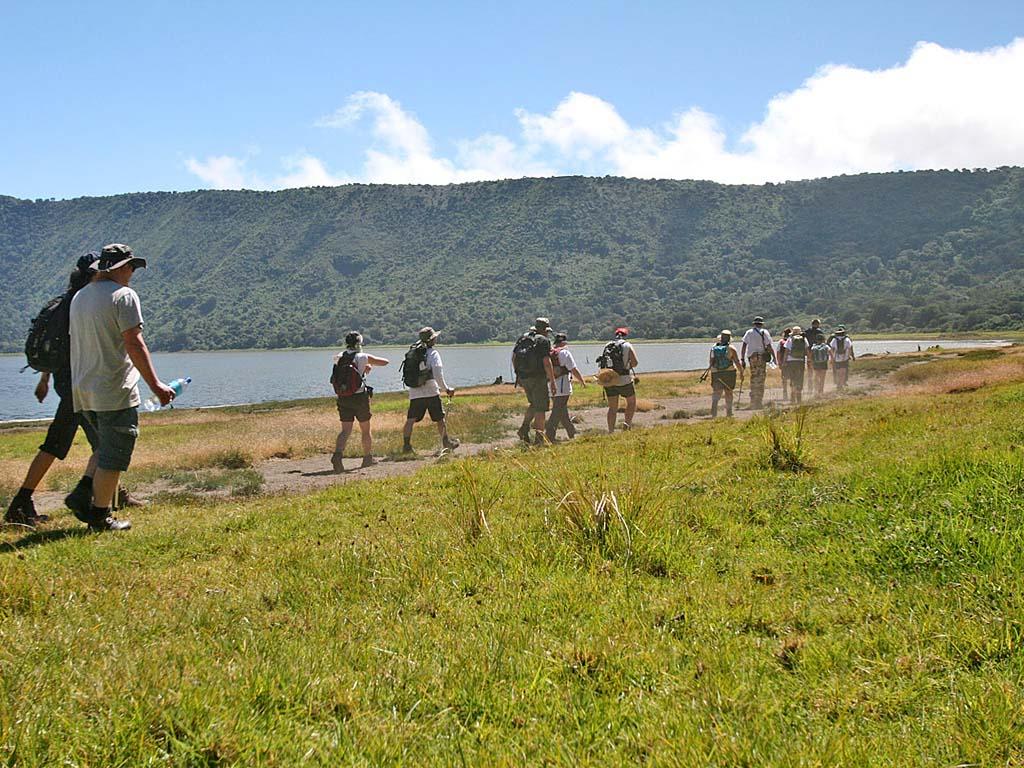
The landscape, zone by zone
Machame climbs through the main ecological belts of the mountain. You begin in damp montane forest, move into heath and moorland, cross the high alpine desert and finish in the glacial zone near the summit.
The route approaches from the south and swings around the mountain, so views change often. Clouds can cover the lower slopes while the upper mountain stays clear.
Machame is often described as a route you walk through rather than simply up. Each day brings a new landscape, which keeps morale up on long walking days and gives photographers plenty to work with.
How the route is paced
Machame follows a climb-high, sleep-low rhythm on several days, where you gain height during the day and descend a little to sleep. Many climbers find this helps with acclimatisation.
The route goes under the Barranco Wall, a rocky section that is more of a hands-on scramble than a technical climb. It is a highlight for most people and a nerve test for a few.
- Camping every night, with tents and meals provided by the crew
- Longer itineraries give more time to adjust to altitude
- Summit day starts in the dark and is the hardest day
- Descent normally finishes on a different path to the start
Who Machame suits
If you want scenery, you are comfortable sleeping in a tent and you have trained for several consecutive days of walking, Machame is a strong choice. It tends to be busier than Lemosho or Rongai in peak months, which some find sociable and others find crowded.
First-timers often do well on it if they choose a longer itinerary rather than the shortest option.
Planning your Machame trip
We pair the climb with hotel nights and transfers, and can add a safari or beach stay afterwards. The itinerary is tailored to your dates and budget; ask us for a current quote.
Read our route notes on weather and packing so nothing surprises you on day one.
Weather and what to wear
Expect warm, humid conditions in the forest and bitter cold near the summit, often within the same trip. Layering is the answer: a base layer, insulating mid layers, a windproof shell and a warm hat and gloves for summit night.
Rain can arrive on the lower slopes in any season, so waterproof trousers and a pack cover are worth carrying. Our gear list explains what to bring, what to rent and what to leave at the hotel.
Related pages on our site
Frequently asked questions
Is Machame harder than Marangu?
They are different rather than simply harder or easier. Machame involves more varied terrain and camping, while Marangu uses huts on a steadier path. Your choice should depend on comfort, fitness and itinerary length.
Do I need technical climbing skills?
No. Kilimanjaro is a trek, not a technical climb. The Barranco Wall needs hands for balance in places, but ropes and specialist equipment are not normally used. Poles and good boots help more than special gear.
Is Machame crowded?
It is among the more popular routes, so expect other groups on the trail and at camps in busy seasons. Travelling in shoulder months or choosing a longer itinerary can ease that.
When is the best time to go?
Many climbers aim for the drier periods, typically around January to March and June to October. Conditions vary every year, so treat those as general patterns, not guarantees. Mountain weather changes quickly, so ask us about your dates.