
Practical advice for the often-overlooked descent of Kilimanjaro, from saving your knees on scree to the final muddy walk to Mweka Gate.
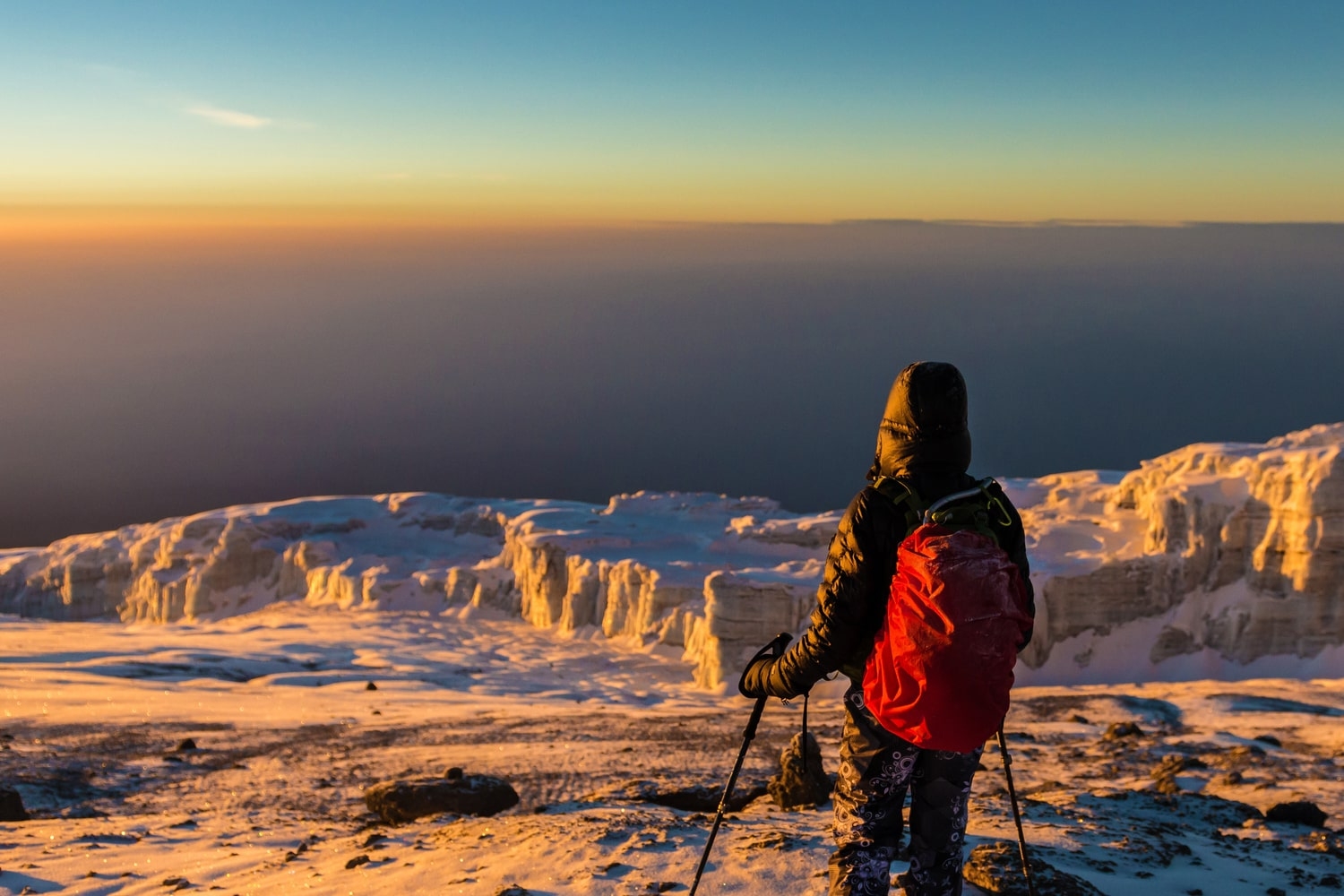
Most preparation for Kilimanjaro focuses on getting up. Yet many climbers tell our guides that the way down was harder on their bodies than the climb. After summit night you may descend more than 2,000 meters in a single afternoon, on tired legs, often with little sleep.
With a bit of technique and the right gear, the descent can be comfortable and even enjoyable, as thicker air restores your energy with every step.
Quick tips
- Lengthen your trekking poles slightly for steep downhill sections.
- Trim your toenails short before you start climbing.
- Retie your boots tightly at Barafu before descending.
- Eat and drink during the descent even if you feel elated or exhausted.
- Pack sandals and a fresh shirt for after Mweka Gate.
Why the descent is demanding
Going downhill loads the knees and the fronts of the thighs much more than climbing does. Combine that with loose scree, fatigue after the summit and a long distance, and it is easy to strain a joint or turn an ankle.
On routes that exit via Mweka, you typically descend from the summit to Barafu, rest briefly, then continue to a lower camp. The final morning follows a steep, often slippery forest trail to the gate.
Altitude problems usually ease as you lose height, which is why descent is the main treatment for altitude sickness. Even so, keep an eye on how you feel and tell your guide about any symptoms that persist, such as a headache that does not improve with rest and fluids.
Using trekking poles properly
Poles can take a meaningful share of the load off your knees on descents. Lengthen them a few centimeters for downhill sections so you do not have to stoop, and plant them slightly ahead of you to brake and stabilize.
Use the wrist straps on open trail, but slip your hands out on rocky ground so a stuck pole cannot wrench your wrist.
- Practice with poles on hills at home before your trip.
- Choose poles with a reliable locking mechanism.
- Bring rubber tips for any paved or rocky sections near the gate.
Technique on scree and in the forest
On the upper scree slopes, keep your knees soft and take short, shuffling steps, letting your heels dig in. Some climbers enjoy a controlled scree-run, but only do this if your guide says the slope is suitable and you feel steady.
Lower down, the forest path can be muddy and rooty. Shorten your stride, step on flat surfaces rather than wet roots, and keep your weight over your feet. Slow and steady remains the rule, just as on the way up.
Protecting feet and toes
Bruised toenails are one of the most common complaints after Kilimanjaro. Trim your nails short before the climb and lace your boots firmly before the descent so your feet do not slide forward. A dry pair of socks at Barafu helps prevent blisters.
If a toe starts to hurt, stop early and let your guide help you adjust your lacing or apply tape. Small problems are much easier to fix before they turn into painful blisters halfway down.
Mweka Gate and the final morning
At Mweka Gate you sign out of the national park, and successful climbers receive their summit certificates. This is also where many teams hold a farewell and tipping gathering with porters and guides. We give guests guidance on tipping customs before the climb, so you can prepare cash in envelopes beforehand.
Keep a clean shirt and sandals in your duffel for the drive back to your hotel.
Frequently asked questions
How long does the descent take?
On most camping routes the descent takes a day and a half after the summit. The afternoon after summit night is the longest, with a shorter walk to the gate the following morning.
Do I need knee supports?
If you have a history of knee trouble, a support or brace can help, but consult your doctor or physiotherapist first. For most climbers, poles and good technique make the biggest difference.
Which gate will I exit from?
Machame, Lemosho and similar western and southern routes usually exit at Mweka Gate. Marangu and Rongai climbers descend via the Marangu route and exit at Marangu Gate.
