
A complete guide to trekking Mount Meru, Tanzania's second-highest peak, with wildlife-rich lower slopes, a dramatic crater rim and sunrise views of Kilimanjaro.
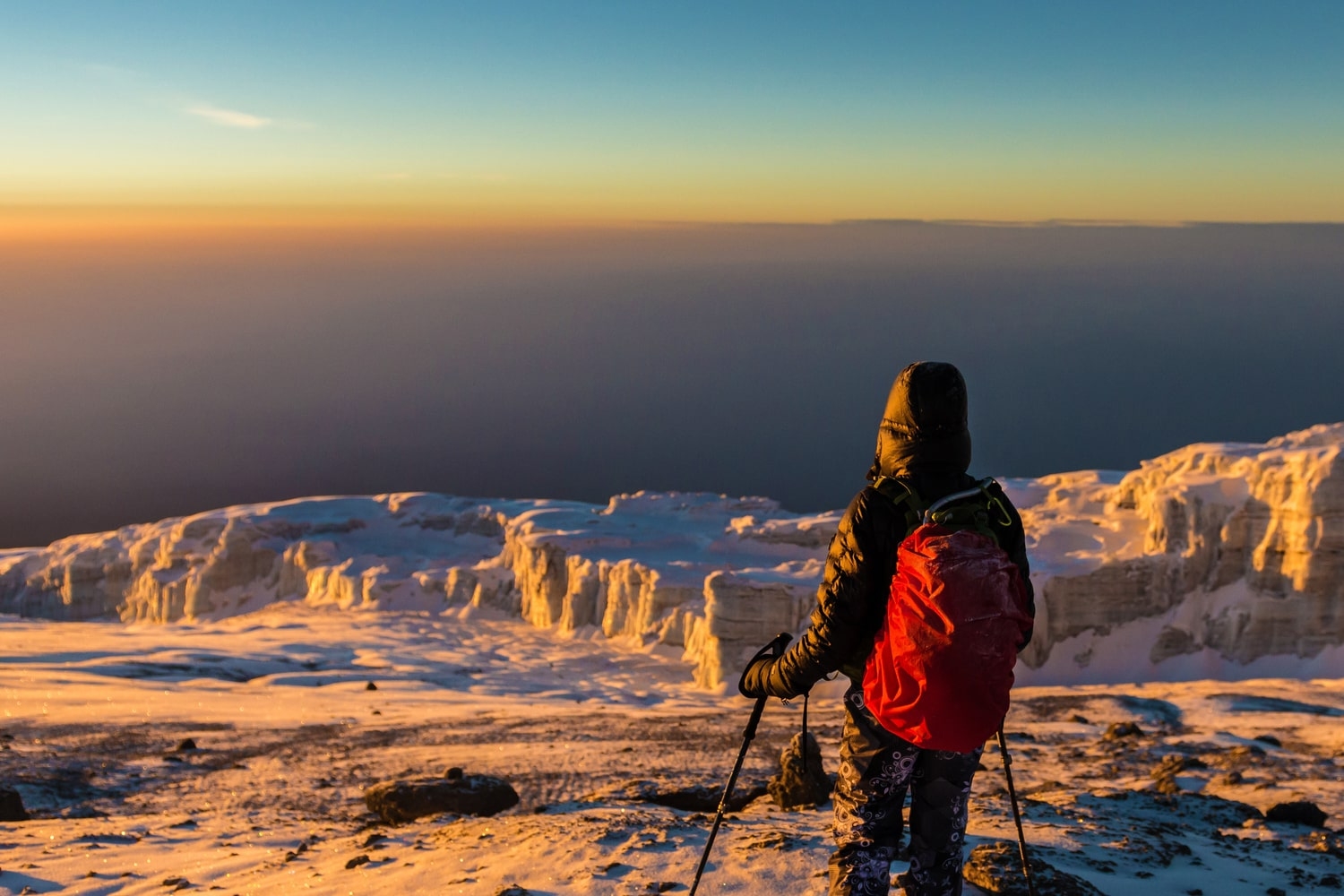
Rising above Arusha at 4,566 meters, Mount Meru is Tanzania's second-highest mountain and one of East Africa's most underrated treks. It sits within Arusha National Park, so the first day feels more like a walking safari than a climb, while the summit ridge traces the rim of a vast collapsed crater.
For our team in Arusha, Meru is a local favorite: it is quieter than Kilimanjaro, remarkably varied, and an excellent way to acclimatize before a bigger climb.
Quick tips
- Choose four days for a more comfortable acclimatization profile.
- Climb Meru before Kilimanjaro to help your body adjust to altitude.
- Follow the armed ranger's instructions at all times on the lower slopes.
- Pack gloves with good grip for the rocky, sometimes icy summit ridge.
- Bring binoculars for wildlife and birding on the first day.
Walking with an armed ranger
Because buffalo, elephant and other large animals roam the lower slopes, every group on Meru is escorted by an armed park ranger. This is standard national park practice and not cause for alarm; the ranger's job is to keep a safe distance between walkers and wildlife.
Listen to the ranger's instructions, stay together and do not wander off the trail. Their knowledge of animal behavior also makes them excellent spotters.
Wildlife on the trail
Few mountains in Africa let you hike past giraffe, buffalo, warthog and bushbuck on your way to the top. The forest belt is home to black-and-white colobus monkeys, and the birdlife, including turacos and hornbills, is excellent.
The trek starts at Momella Gate on the eastern side of the park. Arrive early and you may spot animals on the drive in.
Remember that these are wild animals. Keep your voice low when the ranger signals, never approach buffalo or elephant, and take photographs from where you stand rather than moving closer.
A typical three- or four-day itinerary
Most climbers take three or four days. The four-day version gives more time to adjust to altitude and is the one we recommend for most guests.
- Day 1: Momella Gate to Miriakamba Hut, at roughly 2,500 meters, through grassland and forest.
- Day 2: Climb to Saddle Hut, at roughly 3,500 meters, with an optional afternoon walk up Little Meru.
- Day 3: Pre-dawn summit push along the crater rim to Socialist Peak, then descend to Saddle or Miriakamba Hut.
- Final day: Descend to Momella Gate and transfer back to Arusha.
The summit ridge and crater
Summit day begins in the dark and follows a narrow ridge above the crater wall, with a steep drop on one side and the ash cone rising from the crater floor below. Some sections involve scrambling over rock, and the ridge can be icy early in the morning.
The reward is sunrise from the top, often with Kilimanjaro floating above the clouds to the east. It is one of the most memorable views in Tanzania.
A head for heights helps, but the path is well trodden and guides set a careful pace. Trekking poles are useful on the ridge, though you may want to stow them where you need your hands. The descent is steep and loose in places, so take it slowly.
Huts and comfort
Meru uses simple mountain huts with bunk beds and shared dining areas, so there is no need to camp. Bring a warm sleeping bag, as nights at Saddle Hut are cold. Facilities are basic but practical, and our cooks prepare meals on site.
Frequently asked questions
Is Mount Meru harder than Kilimanjaro?
Meru is lower but steeper in places, and the exposed summit ridge requires more care. Many climbers find summit day comparably tough, though shorter overall.
Why do I need an armed ranger?
The lower slopes of Arusha National Park are home to buffalo, elephants and other large animals. Park rules require a ranger to escort trekking groups for safety.
Can I climb Meru and Kilimanjaro on the same trip?
Yes, and it is a popular combination. Climbing Meru first helps your body acclimatize, and a rest day between the two climbs is a good idea.
